
Sometimes, standard solutions cannot cover all business requirements. Experienced partners bridge this gap by combining industry and technical expertise—leveraging solution accelerators or developing custom extensions that seamlessly enhance Microsoft Dynamics 365 Business Central.
Key benefits:
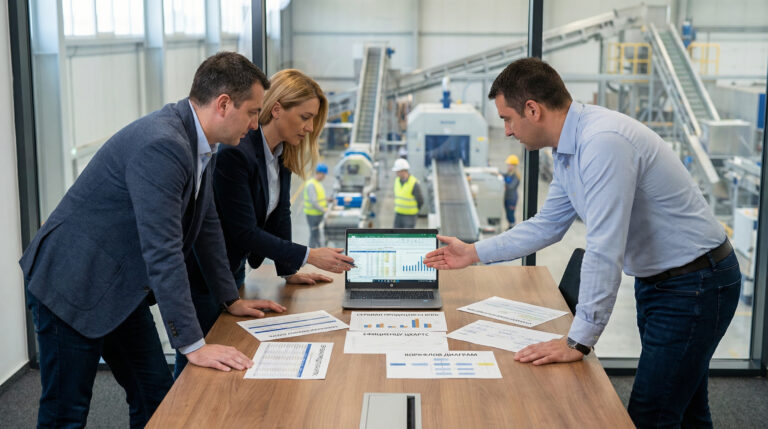
We deliver seamless omnichannel ERP integration for unified operations and data-driven decisions. In the future, we’ll focus on AI-driven demand forecasting and personalized customer experiences, including dynamic pricing and promotions.
Seamless ERP and MES integration connects production, resources, and data, delivering real-time insights and operational efficiency. Looking ahead, we’ll leverage AI and IoT for predictive maintenance, demand forecasting, and intelligent automation.
With ERP-driven transformation across inventory, sales channels, and operations, we enable data-driven inventory and omnichannel management. E-commerce and value-added services elevate customer experience, while AI and predictive analytics will power the future.
We provide ERP solutions for other industries, ensuring regulatory compliance and tailoring them to each business operation. AI will drive automation of processes, while Dynamics 365’s will offer flexible, tailored module adoption.
Standard ERP solutions, such as Business Central, along with other applications from the Microsoft ecosystem (Power Platform, Power BI, Microsoft 365), cover most business processes as they are based on global best practices.
However, there are situations where specific industrial or business requirements cannot be efficiently addressed using existing functionalities or additional tools. In these cases, we approach the development of custom solutions—but only after assessing that using standard options is not viable.
When making a decision about development, we look at feasibility from an operational-technical perspective (whether it is possible to integrate and maintain the solution, and to what extent it simplifies work for employees) and a financial perspective (whether the investment brings measurable results).
Beyond customizations within the ERP software itself, custom solutions can include:
In these projects, we always strive to meet the real needs of the client while keeping cost optimization and long-term sustainability in mind.
Custom solutions never work in isolation; they are part of a broader business ecosystem. When we develop additional modules or completely new solutions, we always ensure integration with existing ERP and other systems as required, as well as analytical tools like Power BI. This ensures a unified database where all systems exchange information in real-time.
For example:
The result is a connected business system where custom solutions complement existing platforms without compromising the integrity of data and processes.
Choosing an ERP partner is one of the most critical factors for a successful implementation and the development of custom solutions. The reason is simple: ERP projects are complex and span several vital phases: business process analysis → configuration and development → implementation (data migration, testing, and training) → go-live support. Without sufficient experience and capacity, a project risks failure due to poor analysis, inadequate configuration, or insufficient support.
A true ERP partner should:
Projects often struggle when a partner is selected based on price alone, without vetting their capacity, experience, or localization quality. It is essential to choose a partner who earns your trust, supports your growth, and ensures the long-term stability of your system.
Koristimo kolačiće da bismo poboljšali vaše iskustvo pregledanja, pružili personalizovane oglase ili sadržaje i analizirali naš saobraćaj. Ako kliknete na dugme „Slažem se”, prihvatate našu upotrebu kolačića.
Prilagodite željene postavke:
Neophodni kolačići su obavezni da bi se omogućile osnovne funkcije ovog sajta, kao što su obezbeđivanje bezbednog prijavljivanja ili prilagođavanje željenih postavki saglasnosti. Ovi kolačići ne skladište nijedan podatak sa ličnim informacijama.
These cookies are needed for adding comments on this website.
Google Tag Manager simplifies the management of marketing tags on your website without code changes.
These cookies are used for managing login functionality on this website.
WPForms is a user-friendly WordPress plugin for creating custom forms with drag-and-drop functionality.
Analitički kolačići se koriste da bi se razumelo na koji način posetioci ostvaruju interakciju sa web-sajtom.
Google Analytics is a powerful tool that tracks and analyzes website traffic for informed marketing decisions.
Service URL: policies.google.com (opens in a new window)
WPForms User Journey is a WPForms addon that records the pages a visitor viewed on the site before they submitted a form, and shows that path alongside the form entry.
Service URL: wpforms.com (opens in a new window)
Kolačići za oglašavanje se koriste da bi se posetiocima obezbedili prilagođeni oglasi na osnovu stranica koje su prethodno posetili i da bi se analizirala efikasnost kampanja oglašavanja.
Facebook Pixel is a web analytics service that tracks and reports website traffic.
Service URL: www.facebook.com (opens in a new window)
Pronađite više informacija:Terms of Use and Privacy Policy.