

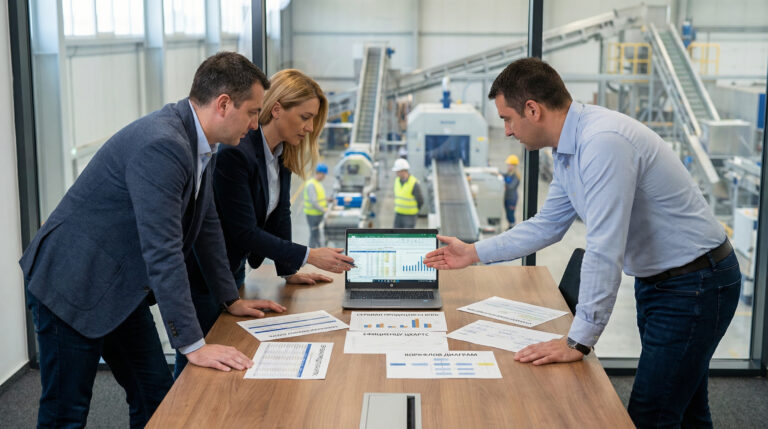
We deliver seamless omnichannel ERP integration for unified operations and data-driven decisions. In the future, we’ll focus on AI-driven demand forecasting and personalized customer experiences, including dynamic pricing and promotions.
Seamless ERP and MES integration connects production, resources, and data, delivering real-time insights and operational efficiency. Looking ahead, we’ll leverage AI and IoT for predictive maintenance, demand forecasting, and intelligent automation.
With ERP-driven transformation across inventory, sales channels, and operations, we enable data-driven inventory and omnichannel management. E-commerce and value-added services elevate customer experience, while AI and predictive analytics will power the future.
We provide ERP solutions for other industries, ensuring regulatory compliance and tailoring them to each business operation. AI will drive automation of processes, while Dynamics 365’s will offer flexible, tailored module adoption.
Microsoft Dynamics 365 Business Central is a modern ERP solution designed for the integrated management of all core business processes. As the successor to Dynamics NAV (Navision), it delivers enhanced functionalities through a cloud-first approach, while offering flexible deployment options—cloud, on-premise, or hybrid.
Primarily aimed at medium-sized enterprises, this scalable platform uses specialized apps to support rapid growth and complex needs. It covers the entire business cycle through these key segments:
Integrating seamlessly with Microsoft 365, Teams, and the Power Platform, it enables advanced collaboration and intelligent automation, driving unparalleled efficiency across the organization.
Microsoft Dynamics 365 Business Central integrates and automates key business processes within a single ERP solution, reducing manual interventions and increasing efficiency. Within a unified system, Business Central streamlines the following functions:
These business functions are unified within a single ERP system, providing real-time visibility and transparency throughout the entire process. This foundation empowers faster decision-making and seamless cross-functional collaboration.
Microsoft Dynamics 365 Business Central provides a powerful foundation for data-driven management, ensuring decisions are based on reliable, real-time intelligence. The system delivers:
Ultimately, Business Central serves as your Single Source of Truth, enabling management to respond with speed and confidence to shifting market demands.
We always strive to map as many of our clients' processes as possible to the Standard Business Central solution, as it was developed based on global best practices. Of course, no software can perfectly match every business process of a specific company. This is where the flexibility of Business Central shines, offering the ability to upgrade either through the system itself or through additional Microsoft applications that handle specific processes even better.
Business Central is successfully applied across various industries. However, our experience has shown the greatest benefits in sectors such as Manufacturing, Retail, Distribution, and Wholesale. In these sectors, the system brings the highest value through supply chain optimization, cost tracking, and process automation. This is why we focus on these industries—we have recognized that Business Central has the greatest impact on their efficiency and profitability.
Additionally, the system provides a modular approach, meaning a client can add functionalities as needed (for example, adding the Service module only when the need arises). Furthermore, Microsoft continuously works on updates and improvements, providing users with access to new features regularly—a benefit that is particularly evident today with the increasing presence of Artificial Intelligence.
Selecting an implementation partner is arguably the most critical step alongside the selection of the ERP solution itself. While the software provides the functional tools, the partner provides the strategic blueprint. The success of the project and the long-term value of the system depend entirely on this partnership; a partner acts as a strategic advisor, and their expertise determines the project's ultimate return on investment.
The Decisive Role of the Partner: ERP implementation is a complex journey that unfolds through several vital phases: Business Process Analysis, Configuration and Development, Deployment (including data migration and testing), User Training, and Post-Go-Live Support. The quality of execution in each of these phases directly dictates whether the system becomes a catalyst for growth or a source of operational friction.
Strategic Considerations for Success
The right partner provides more than just a successful "Go-Live"—they ensure that Business Central remains a flexible, powerful engine for your company’s long-term growth.
Selecting an implementation partner is a strategic decision that goes beyond a purely technical choice. An ERP solution like Microsoft Dynamics 365 Business Central becomes the backbone of your operations, so the partner you choose directly impacts efficiency, user adoption, and long-term return on investment. A successful selection requires balancing technical expertise, business understanding, and long-term reliability.
Key criteria to prioritize include:
By focusing on these criteria, you ensure your implementation partner not only delivers a functional system but also supports your long-term growth and digital transformation.
Koristimo kolačiće da bismo poboljšali vaše iskustvo pregledanja, pružili personalizovane oglase ili sadržaje i analizirali naš saobraćaj. Ako kliknete na dugme „Slažem se”, prihvatate našu upotrebu kolačića.
Prilagodite željene postavke:
Neophodni kolačići su obavezni da bi se omogućile osnovne funkcije ovog sajta, kao što su obezbeđivanje bezbednog prijavljivanja ili prilagođavanje željenih postavki saglasnosti. Ovi kolačići ne skladište nijedan podatak sa ličnim informacijama.
These cookies are needed for adding comments on this website.
Google Tag Manager simplifies the management of marketing tags on your website without code changes.
These cookies are used for managing login functionality on this website.
WPForms is a user-friendly WordPress plugin for creating custom forms with drag-and-drop functionality.
Analitički kolačići se koriste da bi se razumelo na koji način posetioci ostvaruju interakciju sa web-sajtom.
Google Analytics is a powerful tool that tracks and analyzes website traffic for informed marketing decisions.
Service URL: policies.google.com (opens in a new window)
WPForms User Journey is a WPForms addon that records the pages a visitor viewed on the site before they submitted a form, and shows that path alongside the form entry.
Service URL: wpforms.com (opens in a new window)
Kolačići za oglašavanje se koriste da bi se posetiocima obezbedili prilagođeni oglasi na osnovu stranica koje su prethodno posetili i da bi se analizirala efikasnost kampanja oglašavanja.
Facebook Pixel is a web analytics service that tracks and reports website traffic.
Service URL: www.facebook.com (opens in a new window)
Pronađite više informacija:Terms of Use and Privacy Policy.